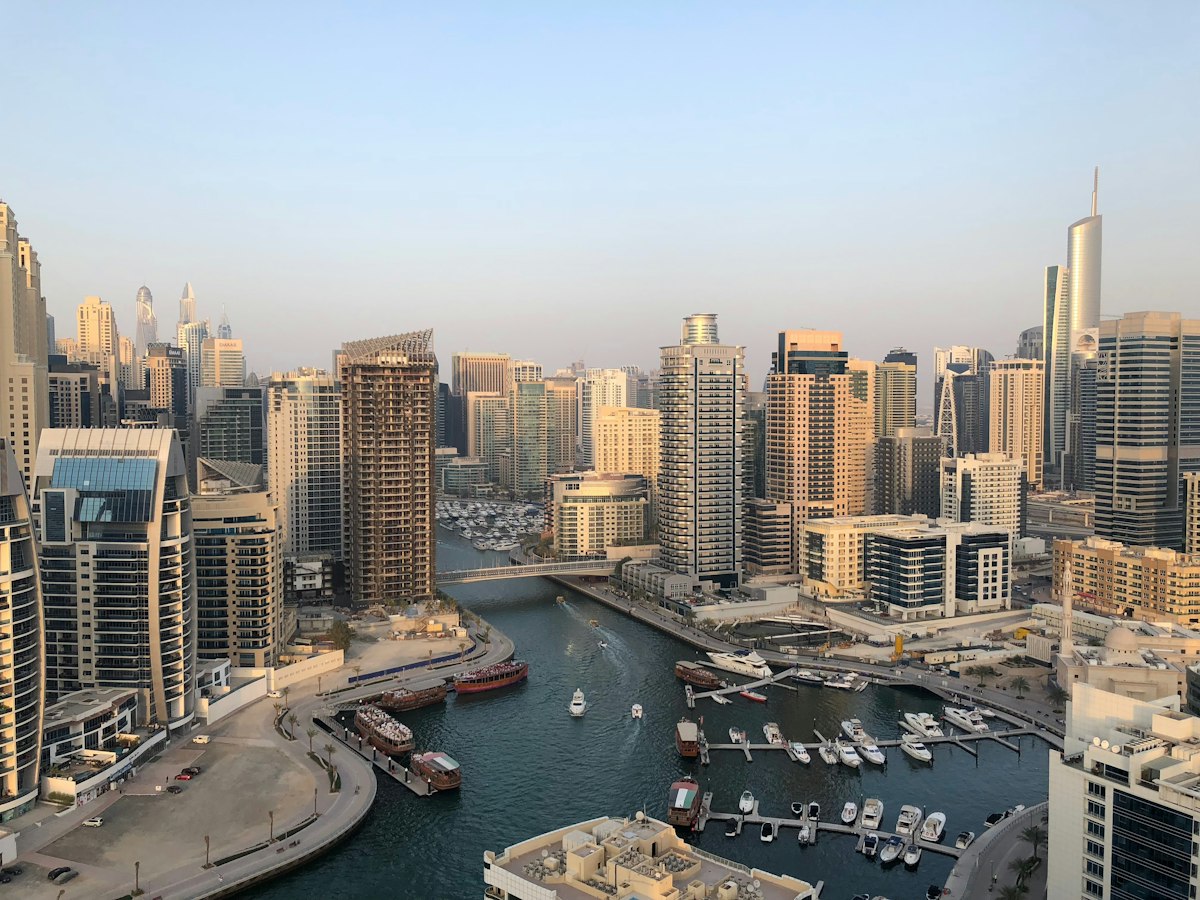
Geopolitical tensions have shaken investor confidence in the Middle East. We break down the real risks, the long-term fundamentals, and where the opportunity lies for strategic investors.
In the last few months, geopolitical tensions in the Middle East — especially involving Iran, Israel, and the United States — have created a wave of uncertainty across global markets. Naturally, one of the biggest questions investors are asking today is: Is UAE real estate still a safe and smart investment? This is not a question to answer emotionally. It is a moment that demands clarity, logic, and a strong investment mindset.
What actually happened and what it means
Recent geopolitical tensions led to concerns about regional stability. While the UAE remains structurally strong, the perception of safety — which has always been one of its biggest advantages — was temporarily shaken. This does not mean the market collapsed. It means the market paused to reassess. Short-term transaction volumes slowed and some off-plan demand hesitated. This is a classic uncertainty phase, not a structural break.
Separating sentiment from fundamentals
The biggest risk right now is not just geopolitical tension — it is investor psychology. Earlier, Dubai was seen as one of the safest global investment hubs. Today, investors are asking what happens if instability continues. This shift in perception can slow decision-making and temporarily impact demand. However, it is important to separate short-term sentiment from long-term fundamentals — and the long-term fundamentals of the UAE have not materially changed.
Long-term UAE fundamentals — still intact
Despite recent events, the UAE continues to offer a tax-free investment environment, strong rental yields compared to global cities, high demand from expatriates and global capital, world-class infrastructure, and strategic global positioning. These structural factors — the dirham peg, freehold ownership for foreigners, zero property tax, efficient legal recourse — have not changed and are unlikely to change in the medium term.
Where the opportunity lies today
When uncertainty enters the market, sellers become more flexible, developers offer better deal terms, prices may soften temporarily, and negotiation power shifts toward buyers. For long-term investors, this phase allows entry at better valuations, more aggressive negotiation, and access to premium assets at relatively lower prices. The investors who have consistently built wealth in real estate are those who made decisions during uncertainty rather than waiting for it to pass.
Who should and should not invest right now
You should consider investing if you have a 5–10 year horizon, are focused on asset quality rather than short-term appreciation, understand the risk and can handle short-term volatility, and are targeting prime or high-demand locations. Exercise caution if you are looking for quick flips, are driven by fear or speculation, lack a clear strategy, or are investing without proper diligence. The market rewards clarity during uncertainty — not comfort-seeking.
The final verdict
Is UAE real estate still worth investing in? Yes — but only for strategic, long-term investors with proper diligence. This is not the time for emotional decisions. Historically, periods of geopolitical tension create short-term pauses, but once stability returns, capital flows back into structurally strong economies. The UAE has demonstrated this pattern repeatedly. At The Asset Syndicate, we only list developers and projects that have passed our vetting process — covering financial health, legal standing, market fundamentals, and delivery track record. So when you explore inventory on our platform, the strategic groundwork has already been done. Register to see current opportunities across Dubai, Kasauli and Shimla at theassetsyndicate.com.
Common questions about this topic
Is UAE real estate safe to invest in despite geopolitical tensions?+
The UAE has demonstrated institutional resilience through multiple geopolitical cycles. Its tax-free environment, strong regulatory framework, and strategic global positioning remain structurally intact. Short-term transaction slowdowns are normal during uncertainty phases, but long-term fundamentals — yields, infrastructure quality, and expat demand — have not materially changed.
What are rental yields in Dubai in 2026?+
Dubai premium residential yields 5–8% annually, significantly above comparable global markets. Actual yield depends on location: Downtown and Palm Jumeirah yield 4–6%; submarkets like JVC or Dubai South can yield 7–9%. Zero property tax makes net yields especially competitive against London, Singapore, or Mumbai equivalents.
Did the Iran-Israel-USA conflict affect Dubai property prices?+
Short-term transaction volumes slowed and some off-plan demand paused during peak uncertainty. However, there was no material price correction in premium segments. Dubai's property market has consistently recovered after geopolitical events because its economic fundamentals are driven by global capital flows rather than regional politics alone.
Which areas in Dubai are best for real estate investment in 2026?+
For capital appreciation: Palm Jumeirah, Downtown Dubai, Jumeirah Bay Island, and Dubai Hills. For rental yield: JVC, Dubai South, and Business Bay. For long-term security: waterfront and branded residences in established areas. The right choice depends on your objectives — yield strategies require different locations than appreciation strategies.
How does Dubai compare to other global real estate markets for NRI investors?+
Dubai offers a combination unavailable elsewhere: zero property tax, 5–8% gross yields, USD-pegged currency, freehold foreign ownership, and efficient legal recourse. Compared to London (1–3% yield, high taxes), Singapore (3–4%, high stamp duty for foreigners), or Mumbai (2–3%), Dubai's risk-adjusted case for NRI investors remains strong.